
The immediate aftermath of a car accident is a turbulent blur of adrenaline, confusion, and stress. Whether you have experienced a minor fender-bender on your morning commute or a major multi-vehicle highway accident, the physical and emotional shock can temporarily cloud your judgment. Once you ensure that all passengers are safe and law enforcement has documented the scene, a new type of anxiety settles in: figuring out how to repair your vehicle. Your car is likely one of your largest financial investments, and returning it to its pre-accident condition is vital for your safety, daily routine, and long-term financial security.
Unfortunately, many drivers make critical mistakes during this vulnerable period. Pressured by assertive roadside operators or rushed by insurance claims adjusters who are focused on minimizing payouts, vehicle owners often select a repair facility based purely on convenience or proximity. Choosing the wrong professionals can lead to a nightmare of recurring mechanical issues, structural instability, mismatched paint, and a severely compromised resale value.
Demystifying Insurance Direct-Referral Programs
When you call your insurance company to report an accident, the representative will almost immediately guide you toward a list of preferred facilities. This is known in the automotive industry as a Direct Repair Program (DRP). While these programs are marketed as a convenience designed to streamline your claim, it is crucial to understand the underlying mechanics of these corporate relationships before making your final decision.
Insurance companies establish referral contracts with repair facilities to keep claim costs as low as possible. In exchange for a steady volume of customers, a preferred shop often agrees to discounted labor rates, administrative concessions, and the use of alternative or lower-cost replacement parts. While there are many excellent shops within insurance networks, some facilities face intense corporate pressure to prioritize speed and cost-cutting over meticulous craftsmanship.
You must remember that as a vehicle owner, you possess the absolute legal right to choose where your car is repaired. Anti-steering laws exist in almost every jurisdiction to prevent insurance adjusters from forcing or deceptively guiding you into using their network shops. If an adjuster implies that your claim will be delayed, or that you will be financially responsible for differences in labor rates simply because you chose an independent shop, they are using high-pressure tactics.
When interviewing a prospective manager at an independent auto repair shop, ask them directly how they handle insurance negotiations. A premium, independent facility will act as your advocate, writing a comprehensive blueprint based strictly on factory safety standards and dealing with the insurance company directly to cover any necessary supplements. They will treat you, the vehicle owner, as their true customer rather than the insurance corporation. This ensures that when your car undergoes extensive auto repairs, the technician uses the exact methods required to protect your safety on the road, rather than meeting a corporate cost quota.
Decoding Technical Credentials and Equipment Capabilities
Modern vehicles are essentially rolling computers wrapped in complex matrices of high-strength steel, aluminum, and carbon fiber. Repairing them requires specialized training that a general mechanic simply does not possess. When evaluating a facility, you need to look past the clean waiting room and inspect the actual technology and training certifications present on the shop floor.
The automotive industry relies heavily on voluntary training organizations to establish safety baselines. The most critical credential to look for is the I-CAR Gold Class designation. This certification indicates that the facility invests heavily in ongoing annual training for its technicians, ensuring they understand the evolving structural dynamics of modern metallurgy and electronic systems. Additionally, you should search for OEM (Original Equipment Manufacturer) certifications. If a shop is factory-certified by brands like Ford, BMW, or Honda, it means they have been directly audited by the manufacturer and possess the exact frame racks, software, and welding equipment required for those specific vehicles.
- Material Segregation: Aluminum panels require completely isolated workstations. If aluminum dust mixes with traditional steel dust on a shop floor, it creates a chemical reaction known as galvanic corrosion, which degrades the metal over time. Top-tier auto body shops feature dedicated, enclosed clean rooms specifically for aluminum structural work.
- Computerized Measuring Systems: Visual inspections are completely inadequate for modern unibody vehicles. A premium facility utilizes computerized, three-dimensional measuring lasers to compare your vehicle’s bent frame against original factory blueprints down to the exact millimeter, ensuring the structural energy-absorption zones are perfectly restored.
The necessity of advanced technology becomes clear when dealing with vehicle safety grids. Even a relatively low-speed impact can damage the hidden sensors, cameras, and radar units responsible for your vehicle’s adaptive cruise control, automatic emergency braking, and blind-spot monitoring systems. If a shop does not perform a computerized pre-repair and post-repair diagnostic scan, they are neglecting the digital safety architecture of your car. Choosing a shop that focuses specifically on factory-validated collision repairs guarantees that these complex driver-assistance systems are completely recalibrated and verified before you ever buckle your seatbelt again.
Mastering Roadside Logistics and Emergency Response
The choices you make while standing on the side of the road immediately following an impact establish the trajectory for your entire vehicle restoration process. It is during these chaotic moments that vehicle owners are most vulnerable to predatory towing practices that can result in exorbitant storage fees and unauthorized repair work.
In many metropolitan areas, rogue tow truck operators monitor emergency radio frequencies and arrive at accident scenes unsolicited. These operators often use aggressive sales tactics, offering to clear your vehicle from the road quickly or claiming they work directly with your insurance company. If you sign their paperwork without reading the fine print, you may inadvertently authorize them to tow your car to an unvetted, high-fee salvage yard where your vehicle can be held hostage until thousands of dollars in administrative fees are paid.
- Take Direct Control: Never allow an uninvited operator to hook up your vehicle. If the police insist that the car must be moved immediately to clear traffic, request a municipal rotation truck or state clearly that you are calling your own provider.
- Document Everything: Before your vehicle is lifted or loaded onto a flatbed, take clear, high-resolution photographs of all four sides of the car, the interior, and the current odometer reading. This prevents the transit company from claiming that secondary structural damage or missing personal items occurred during the initial accident.
To avoid these roadside complications, it is wise to establish a relationship with a trusted local towing company long before you ever find yourself stranded. Keep their direct contact information saved in your phone alongside your insurance policy details. If your insurance plan or vehicle warranty includes access to emergency roadside services, call that dedicated number immediately following an accident. These corporate programs utilize vetted, fully insured networks of operators who are bound by strict pricing caps and professional conduct codes. By controlling the logistics from the very beginning, you ensure your vehicle is transported directly to a secure location or the credentialed shop of your choice, completely eliminating the risk of predatory roadside scams.
Evaluating Mechanical Restorations and Transport Safety
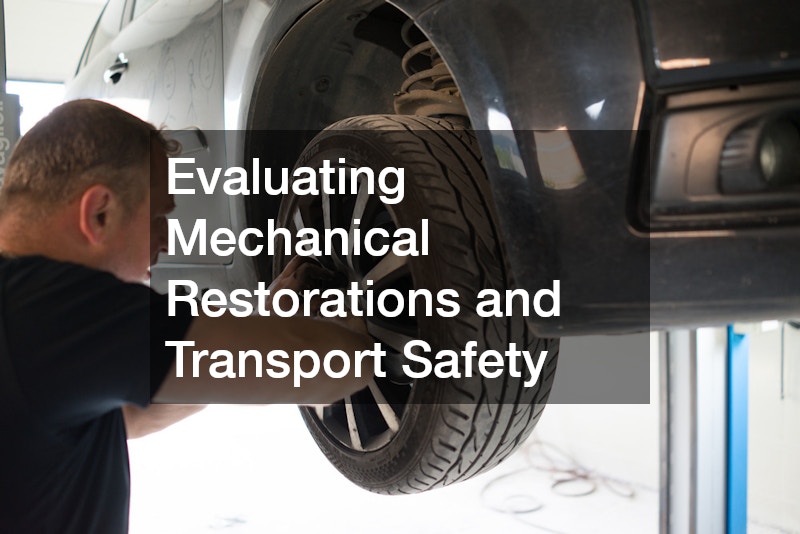
The violent forces involved in an automobile impact do not stop at the exterior sheet metal. Energy ripples through the vehicle’s wheel assemblies, suspension components, and steering linkages, often causing severe, hidden mechanical damage that can compromise the vehicle’s handling and stopping capabilities if left unaddressed.
When a vehicle suffers a front-end or heavy side-impact collision, the kinetic energy frequently bends steering racks, cracks aluminum control arms, and damages delicate brake hydraulics. A shop that merely replaces exterior body panels without performing a deep mechanical teardown is putting you at risk. For instance, a microscopic hairline crack in a brake caliper or a pinched fluid line can easily go unnoticed during a superficial visual inspection, leading to a catastrophic mechanical failure weeks after the cosmetic repairs are finished.
- Suspension Geometry Checks: Even a fractional misalignment in your vehicle’s suspension geometry can cause severe tracking issues, rapid tire degradation, and unpredictable handling at highway speeds. A thorough repair plan must include a complete four-wheel alignment check on a digital alignment rack.
- Braking System Audits: Because your stopping system is your primary safety shield, any impact near the wheel wells demands a complete overhaul of the anti-lock braking system (ABS) modules, rotors, and lines. Sourcing a facility equipped to execute precision local brake repairs ensures that your vehicle’s core mechanical stopping power is fully restored to original factory parameters.
Furthermore, how your vehicle is handled when it is immobile during the repair process is critical. Modern drivetrains, particularly those found in all-wheel-drive (AWD) vehicles and electric vehicles (EVs), are highly sensitive to improper transit methods. Dragging an EV or an AWD car onto a standard wheel-lift truck can cause friction that destroys the electric motors or internal transfer cases.
A professional repair facility understands these technical limitations. If your vehicle needs to be moved between different specialized bays on the shop lot or transported to a factory dealership for specific software updates, the facility must utilize a modern flatbed tow truck to keep all four wheels completely stationary. When vetting a repair center, ask if they manage their own fleet or if they partner exclusively with specialized towing services that train their operators on modern electric and hybrid transit protocols. This prevents secondary drivetrain damage during the rebuilding process.
The Final Walkthrough and Specialized Enhancements
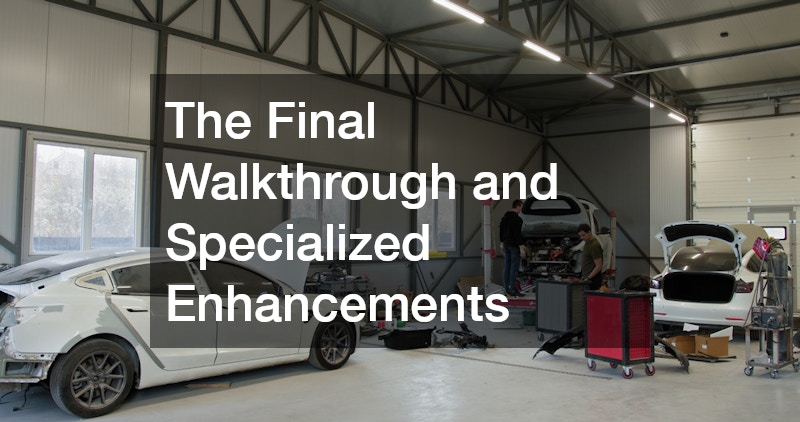
The final phase of choosing and working with a collision professional involves the moment you receive your vehicle back. A truly elite shop will not consider the job complete until the vehicle looks, feels, and handles as though the accident never happened. The final inspection requires a sharp eye and a refusal to be rushed through the paperwork.
When you arrive to pick up your vehicle, request that the car be brought out into bright, natural sunlight rather than being viewed under the fluorescent lights of a garage bay. Natural light is the ultimate tester of automotive refinishing. Look closely at the paint texture across the repaired panels; it should match the original factory texture perfectly, without any signs of bubbling, deep scratches, or rough overspray. Walk around the car and check the gaps between the doors, hood, and fenders. These gaps should be perfectly uniform, indicating that the structural frame has been pulled back to its exact factory dimensions.
- Check the Tech and Glass: Verify that every single electronic feature works flawlessly. Roll the windows up and down, test the backup cameras, and ensure that any replaced glass is free of optical distortion. If a windshield was replaced, verify that the forward-facing camera system was properly calibrated, as a slight miscalculation can cause your lane-keep assist system to malfunction.
- Coordinate Secondary Upgrades: The disruption of an accident can sometimes be leveraged into an opportunity to restore or enhance your vehicle’s interior comfort features. If your side or rear glass windows were damaged and replaced during the repair process, your original window treatments will be gone.
A premium collision facility will often offer or coordinate secondary cosmetic services to restore your vehicle’s cabin environment to its peak state. Sourcing high-quality, heat-blocking car tinting through your repair professional ensures that your newly installed glass matches the shade and UV-protection levels of your remaining original windows. Taking the time to perform this meticulous final walkthrough and ensuring all aesthetic and protective elements are fully addressed gives you the confidence that your vehicle has been completely restored from the inside out.
Conclusion
Navigating the aftermath of an automobile accident is a challenging experience, but finding the right team to restore your vehicle does not have to be an overwhelming ordeal. By shifting your focus toward consumer advocacy and understanding your legal rights, you effectively insulate yourself from poor craftsmanship, corporate cost-cutting, and predatory roadside practices. Never allow the pressure of an insurance adjuster or the chaotic nature of a roadside emergency to dictate the quality of your vehicle’s structural recovery. You hold the ultimate decision-making power when it comes to selecting your repair team. By prioritizing continuous technician training, demanding advanced digital diagnostics, and insisting on uncompromised mechanical safety inspections, you ensure that your vehicle is returned to you in pristine, roadworthy condition.